Socializing a English Cocker Spaniel With Kids, Dogs and Strangers
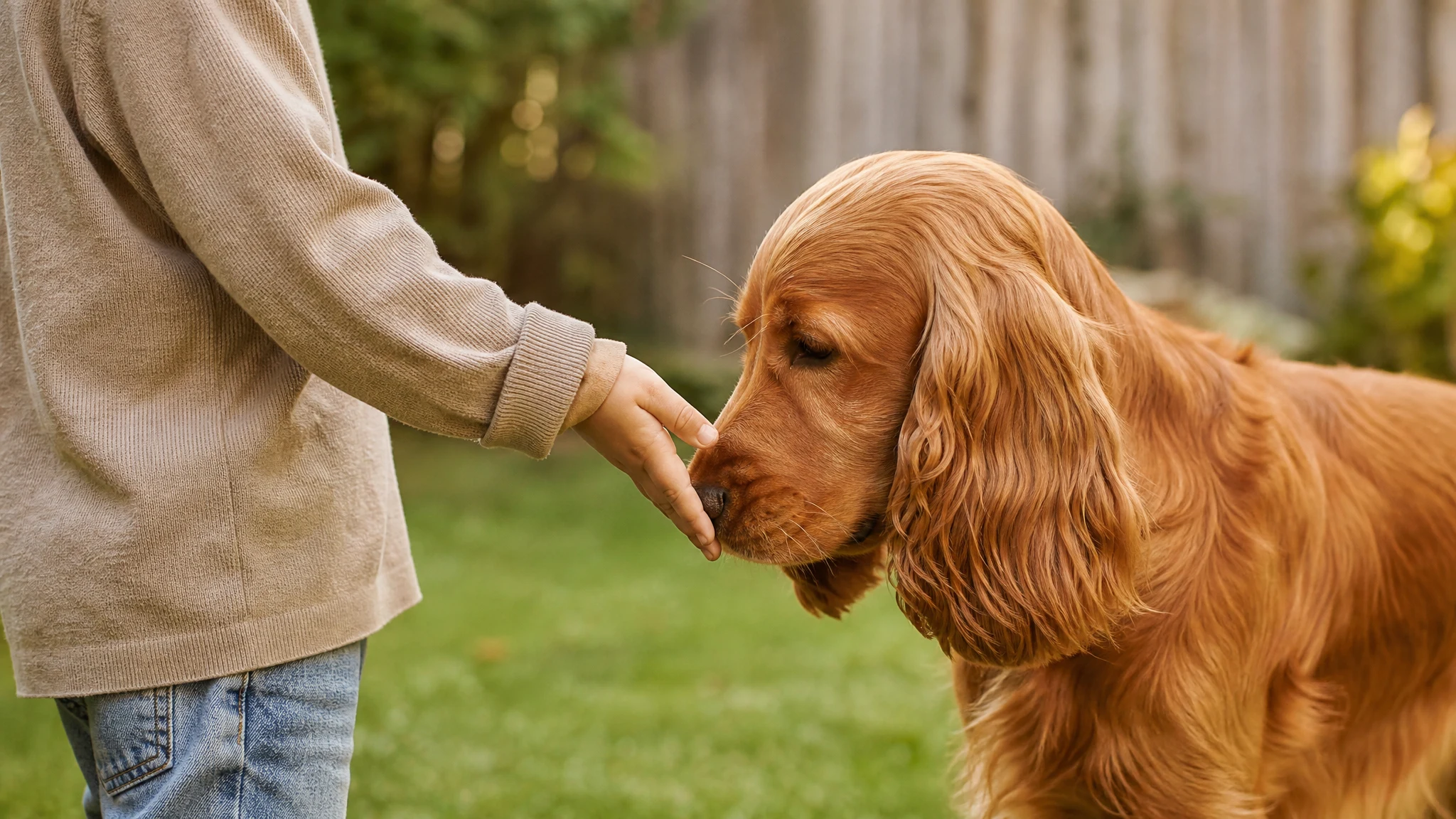
General training information. Every dog is an individual; for health or behavior concerns, see your veterinarian.
English Cocker Spaniel socialization is the work of helping your dog feel calm and confident around the people and animals in your life. It is not about forcing hellos. It is about building good experiences, one small step at a time.
The English Cocker Spaniel Club of America, the breed's parent club, describes the breed as merry, intelligent, athletic, affectionate and devoted as a family companion, and eager to please. Those are good traits to build on. Individual dogs still vary, so watch your own dog and move at their pace.
What to Expect From the Breed
The parent club says the breed was developed to flush woodcock and to find, flush and retrieve upland game. Westminster Kennel Club lists the breed in the Sporting Group and rates its energy at 3 out of 5 and its trainability at 4 out of 5. A dog bred to work closely with people is often keen to learn from them, which helps with socialization.
One more point matters here. Wikipedia notes that the breed prefers company and is not suited to being left alone in a backyard. A dog who lives apart from the family misses many chances to learn about people, so plan for your spaniel to spend daily life with you.
What we cannot tell you
People often ask, "Are English Cocker Spaniels good with kids?" The sources we relied on do not give a ruling on that, or on how the breed behaves with other dogs. The temperament description above is encouraging, but it is not a promise. Ask the English Cocker Spaniel Club of America or a responsible breeder about the parents' behavior around children and other dogs, and judge your own dog by what you see.
Materials You Will Need
- Small, soft treats your dog loves, cut into pea-size pieces
- A well-fitted flat collar or a harness, plus a 6-foot leash
- A long line for open areas, once your dog is ready
- A baby gate or exercise pen for safe separation
- A mat or bed for a "settle" spot
- A few chew items and a stuffed food toy for quiet time
- A notebook to log what your dog met and how they reacted
- A few friendly, calm adults and at least one calm, vaccinated adult dog as helpers
Ask your veterinarian when it is safe for your dog to visit public places and meet unfamiliar dogs, based on vaccinations and local conditions. Until then, you can do a lot at home.
Step-by-Step Socialization Plan
Step 1: Set up a calm home base
Start with a quiet routine. Give your dog a bed or mat in a corner of the room where family activity is easy to see. Reward them for lying down there. This "settle" spot becomes the place they go when visitors arrive or children are playing.
Keep sessions short. Orvis, a retailer that publishes general breed guidance, suggests short and varied training sessions for the breed. Five minutes at a time is plenty.
Step 2: Teach a few basics first
Before you add people or dogs, build a few skills that make every meeting easier: name response, sit, a relaxed leash walk and "leave it." If you need a place to start, see our complete English Cocker Spaniel training guide.
Use reward-based methods only. Pay your dog with treats, praise and play for choices you like. This approach is in line with the American Veterinary Society of Animal Behavior (AVSAB). Harsh corrections can make a nervous dog more worried about the very things you want them to enjoy.
Step 3: Introduce everyday sights and sounds
Social confidence starts with a calm response to the world. Let your dog watch the mail carrier, a rolling stroller, a vacuum or a bicycle from a comfortable distance. Pair each one with a treat. If your dog stares, stiffens or turns away, add distance and try again later.
Step 4: Meet strangers on your dog's terms
Ask helpers to ignore your dog at first and stand or sit quietly. Let your dog choose whether to approach. When they do, the helper can offer a treat from a flat hand, or pet the chest or shoulder rather than reaching over the head.
- Keep greetings brief, then reward your dog for moving away calmly.
- Practice with different ages, voices, hats, glasses and walking aids.
- Ask visitors not to scoop up your dog or crowd them.
An excited spaniel may jump or wiggle with joy. Teach "sit to greet" by rewarding four paws on the floor, and have visitors wait until your dog is calm.
Step 5: Build safe habits with children
Your dog's reaction to kids depends on training and supervision as much as on breed. Treat every child and dog pair as a pair that needs an adult watching.
- Supervise closely. An adult stays within arm's reach whenever the dog and a child are together. If you cannot watch, use a gate, pen or crate so the dog has a safe break.
- Teach children the rules. No hugging or climbing on the dog, no pulling ears or tail, and no approaching a dog who is eating, chewing or sleeping.
- Let kids join the fun in a controlled way. Have an older child toss treats on the floor, or hold a treat in a flat hand while your dog sits.
- Keep sessions short. Two to three minutes, then a break. End while both are still happy.
- Protect the dog's retreat. Make the settle spot off limits to children, so your dog always has a place to rest.
Watch for signs of stress: lip licking, yawning, turning the head away, showing the whites of the eyes, a stiff body or moving away. If you see them, calmly end the interaction. The facts we relied on do not flag guarding or herding behavior around children as a breed concern, but any dog can guard food, toys or resting spots. If your dog freezes, growls or snaps, stop and contact a qualified trainer or behavior professional who uses reward-based methods. Your veterinarian can also check whether pain or illness plays a part.
Step 6: Introduce other dogs gradually
English Cocker Spaniel with other dogs is not a topic the breed sources settle for us, so let your own dog's behavior guide you. Start with one calm, vaccinated, friendly adult dog whose owner you know.
- Begin at a distance. Walk on parallel paths, far enough apart that both dogs stay relaxed. Reward your dog for noticing the other dog and looking back at you.
- Close the gap slowly. Over several walks, decrease the distance a little at a time.
- Allow a short, loose-leash greeting. Keep it to a few seconds, then walk away together. Avoid tight leashes, which can add tension.
- Move to a safe, fenced space. Let the dogs sniff and play with leashes dragging only if both are comfortable. Interrupt before play gets too rough.
- Add variety. Over time, meet dogs of different sizes and energy levels, one at a time.
Skip crowded dog parks while your dog is learning. You cannot control who else is there, and one bad experience can set progress back.
Step 7: Keep practicing as your dog grows
Socialization does not finish at a certain age. Keep meeting new people, places and dogs throughout your dog's life. The parent club cites an average life expectancy of about 14 years, so there is a long time to keep building good habits.
Because the breed is active, give your dog plenty of daily exercise, as Orvis advises. A tired, satisfied dog usually finds it easier to stay calm around visitors and other dogs. Parent club and Westminster pages also list activities such as obedience, agility, tracking and Performance events, which can offer structured chances to be around people and dogs.
Tips for Success
- Quality over quantity. A few calm meetings teach more than a crowded afternoon.
- Pay generously. Reward your dog often for calm behavior near new things.
- Watch body language. A loose, wiggly body and a soft face are good signs. A stiff body or tucked tail means you should add distance.
- Keep ears in mind. Orvis notes the breed's long, droopy ears can be prone to infections. Gentle handling practice is useful, and your veterinarian can advise if your dog's ears seem sore or smelly.
- Be consistent. Every family member should use the same rules and cues.
Common Mistakes to Avoid
- Flooding. Taking a nervous dog into a busy place and hoping they get used to it can increase fear.
- Forced greetings. Pulling your dog toward people or dogs removes their choice.
- Leaving kids and dogs alone together. Even a gentle dog can be pushed too far by a small child.
- Punishing growls. A growl is a warning. Punishing it can hide the signal without fixing the worry behind it.
- Using aversive tools or dominance methods. Shock, prong or choke collars, alpha rolls and scruffing are not part of humane training and can damage trust.
- Isolating the dog. A breed that prefers company does better as part of the household than alone outside.
What Results You Can Expect
With patient, regular practice, many owners find their dogs become more relaxed around visitors, children and other dogs. You may notice quicker recovery after surprises, calmer greetings and more eye contact with you in new places. Progress depends on your dog's personality, history and your consistency, and results vary from dog to dog.
If your dog shows fear, intense reactivity or aggression that does not improve, ask your veterinarian for advice and seek a qualified, reward-based behavior professional. Health and behavior can be linked, and only a veterinarian can tell whether your dog has a medical issue.