How to Potty Train a English Cocker Spaniel Puppy
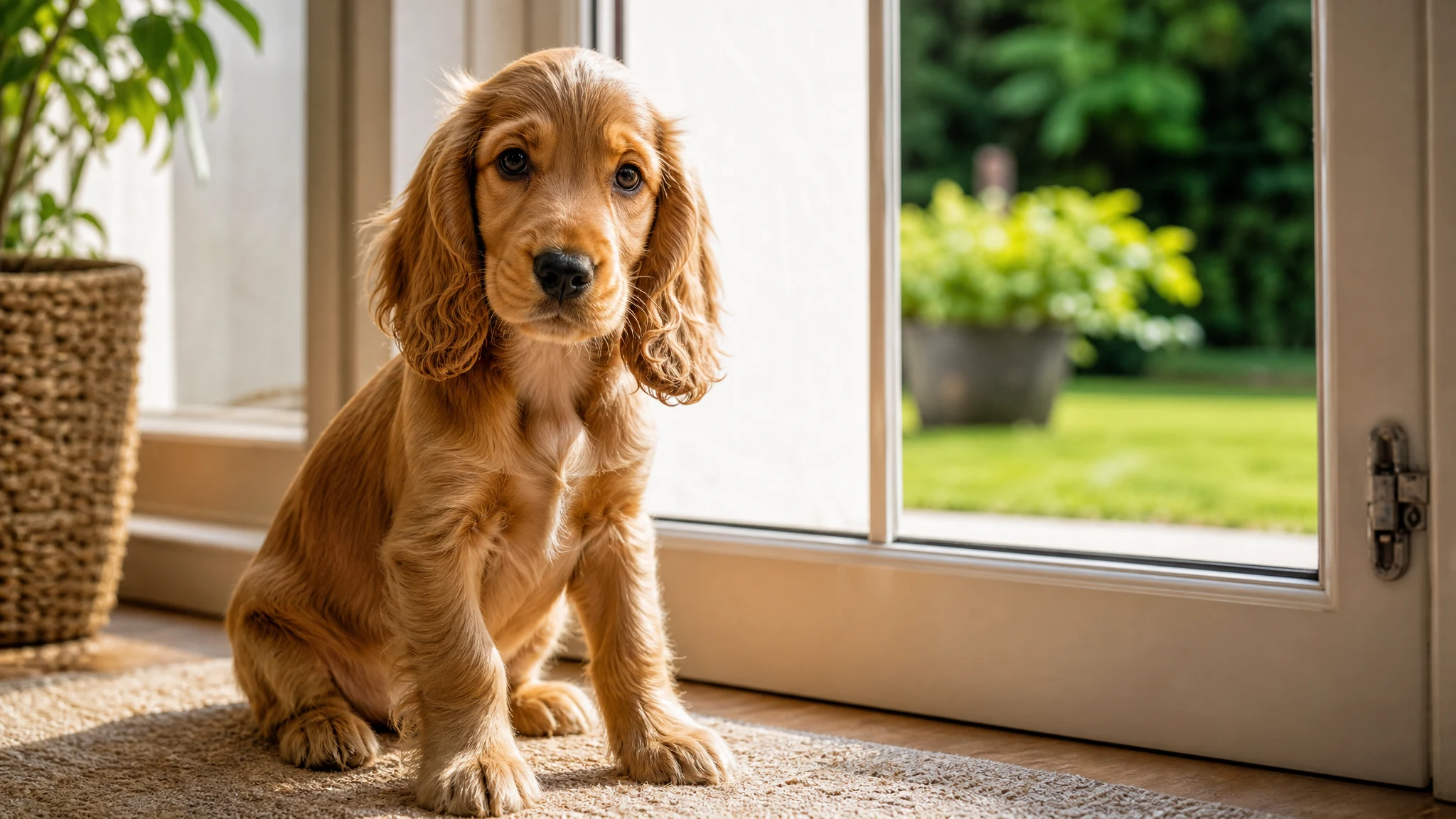
General training information. Every dog is an individual; for health or behavior concerns, see your veterinarian.
English Cocker Spaniel potty training goes best when you treat it as a routine, not a battle. Your puppy does not know the rules yet. Your job is to make the right choice easy and the wrong choice rare.
This guide walks through house training a English Cocker Spaniel from the first day home. It covers a schedule, crate use, what to do after accidents, and what progress can look like.
Why the breed's traits matter for house training
The English Cocker Spaniel Club of America (the breed's parent club) describes the breed as merry, intelligent, athletic, affectionate and eager to please. Westminster Kennel Club rates trainability at 4 out of 5 and energy at 3 out of 5. Those traits can work in your favor. A dog that wants to please tends to respond well to praise and treats.
Wikipedia notes that the breed prefers company and is not suited to being left alone in a backyard. That affects potty training. A puppy who is shut outside alone often learns little about going to the bathroom. You will get better results by going out with your puppy every time.
The parent club gives adult weights of about 26 to 34 lb, depending on sex. So this is a small to medium dog. I could not confirm breed-specific facts about bladder capacity, sensitivity to correction or how long puppies in this breed take to become reliable. Ask your veterinarian or your breeder what is normal for your puppy's age and health. Individual dogs vary.
Materials you will need
- A crate sized so your puppy can stand, turn around and lie down. Too much extra room can let a puppy use one corner as a toilet.
- A leash and a flat collar or harness. A leash keeps trips outside focused.
- Small, soft treats that your puppy can swallow fast. Use tiny pieces so you do not overfeed.
- An enzymatic cleaner made for pet accidents. Check the label and the brand's own instructions for use on your floors.
- A baby gate or exercise pen to limit access to the rest of the house.
- A notebook or phone notes to track meals, naps, trips outside and accidents.
- Patience. It is the most important item on the list.
Step-by-step: how to potty train a English Cocker Spaniel
Step 1: Pick one toilet spot
Choose a patch of yard or a spot near your door. Take your puppy to the same place every time. The smell of earlier trips helps your puppy understand why you are there.
Stand still and stay quiet. Let your puppy sniff. Too much talking or play can distract a young spaniel, and a nose-led breed can find a lot to investigate.
Step 2: Add a cue word
As your puppy starts to go, say a calm cue such as "go potty" once or twice. Do not repeat it over and over. In time, your puppy may link the words with the action.
Step 3: Reward right away
The moment your puppy finishes, praise and give a treat. Timing matters. If you wait until you are back inside, the reward may not connect to going outside.
Keep the party small but happy. After the reward, you can add a short play session or a walk. This teaches that going quickly outside leads to good things.
Step 4: Build a schedule
Puppies often need to go at predictable times. Take your puppy out:
- First thing in the morning
- Right after waking from any nap
- Shortly after eating or drinking
- After play or excitement
- Before bed
- Any time you see sniffing in circles, whining, or heading for a corner
Here is a sample day. Adjust it to your puppy's age, your work hours and your veterinarian's advice.
| Time | What happens |
|---|---|
| Wake-up | Straight outside to the toilet spot, then reward |
| Breakfast | Meal, then a trip outside soon after |
| Mid-morning | Supervised play, outside before and after |
| Late morning | Crate nap, then straight outside on waking |
| Lunch | Meal, then outside |
| Afternoon | Play, nap, and outside after each |
| Dinner | Meal, then outside |
| Evening | Calm time with you, outside every so often |
| Bedtime | Last trip out, then crate |
Feeding at set times makes toilet times easier to predict. Ask your veterinarian how much and how often your puppy should eat.
Step 5: Use the crate as a rest place
A crate can help because most dogs avoid soiling the space where they sleep. Make it comfortable, not scary. Add a soft bed and a safe chew. Feed a few meals in there with the door open.
Use the crate for naps, short absences and overnight sleep. Take your puppy straight outside when you open the door. Do not use the crate as punishment.
A crate is not a place to leave a puppy for long stretches. A puppy who has to hold it too long will have an accident, and the lesson gets muddy. If you must be away, arrange for someone to let your puppy out. Because the breed prefers company, as Wikipedia notes, a lonely puppy may also get stressed. Ask your veterinarian for guidance if your puppy seems distressed in the crate.
Step 6: Supervise when out of the crate
When your puppy is loose in the house, watch closely. Keep your puppy in the same room as you. A leash tied to your belt works well for this. Use gates to close off other rooms.
If you cannot watch, use the crate or a pen. Every accident you prevent is one less rehearsal of the wrong habit.
Step 7: Handle accidents calmly
Accidents will happen. Here is what to do:
- If you catch your puppy in the act, make a neutral sound to interrupt, then carry or lead your puppy outside.
- If your puppy finishes outside, reward as usual.
- If you find the mess later, clean it up and say nothing. Your puppy cannot connect a scolding to something that happened minutes ago.
- Clean with an enzymatic cleaner so the smell does not draw your puppy back to the same spot.
- Look at your notes. Ask what you missed: a longer gap, a bigger drink, an exciting visitor?
Never rub your puppy's nose in a mess, yell, or physically punish. These methods do not fit with humane, reward-based training, which is what the American Veterinary Society of Animal Behavior (AVSAB) supports. Punishment can also teach a puppy to hide when it needs to go, which makes house training harder.
Step 8: Extend freedom slowly
Once your puppy goes outside reliably and has several accident-free days in a row, widen the space a little. Add one room at a time. If accidents return, go back a step. That is normal and not a failure.
Tips for an English Cocker Spaniel puppy
- Go out with your puppy every time. The breed likes company, and you can reward the moment your puppy finishes.
- Keep sessions short and varied. Orvis, a retailer, suggests short, varied sessions and reward-based methods for this breed. That is general guidance, not parent club wording, but it fits well with house training.
- Use the breed's eagerness to please. Praise in a warm, happy voice. Treats help, and so does a quick game after a good trip outside.
- Burn off energy first. Westminster rates the breed's energy level at 3 out of 5, and Orvis notes plenty of daily exercise. A puppy that has stretched its legs may settle more easily. Ask your veterinarian how much exercise is right for a growing puppy.
- Expect distraction. The parent club lists the breed's original purpose as flushing woodcock and finding, flushing and retrieving upland game. A puppy bred from that background may be drawn to scents and movement outdoors. Be patient and keep trips calm and boring until your puppy finishes.
- Keep a log. Patterns show up quickly when you write things down.
- Stay consistent. Everyone in the household should use the same spot, cue and schedule.
Common mistakes to avoid
- Leaving your puppy alone in the yard. Your puppy may play or wander and come back in without going. You will not know, and you cannot reward it.
- Punishing accidents. This can create fear and make your puppy less willing to go in front of you.
- Giving too much freedom too soon. Most accidents come from a puppy loose in the house without a watcher.
- Skipping the trip after naps and meals. These are the most predictable times your puppy will need to go.
- Using a crate that is too big or leaving your puppy in it too long. Both can set back progress.
- Playing before the puppy has finished. Wait for the toilet to happen first, then play.
- Changing the plan every few days. Pick a routine and give it time.
- Ignoring signs of a health problem. If your puppy has sudden frequent accidents, strains, or seems uncomfortable, call your veterinarian. Do not assume it is a training issue.
How long does it usually take?
There is no single timeline. I could not find breed-specific puppy development information from the parent club or the American Kennel Club, so I will not give you a number of weeks or months. How fast your puppy learns depends on age, health, how steady your routine is, and the individual dog.
Many owners see gradual progress with a consistent routine. Early days are mostly about preventing accidents and rewarding the right behavior. Over time, trips outside may become more predictable and accidents less frequent. Some puppies take longer than others, and setbacks can happen during growth spurts, changes at home or after an illness.
Ask your veterinarian what to expect for your puppy's age, and check with your breeder or the English Cocker Spaniel Club of America if you want breed-specific input.
Expected results
With a steady schedule, plenty of supervision and positive reward, many English Cocker Spaniel puppies can learn to ask to go out and to hold it for longer stretches. Results vary, and no method works for every dog.
You may notice:
- Fewer accidents indoors as the weeks go by
- Your puppy heading to the door or waiting at the spot
- Longer, calmer stretches in the crate
- More relaxed trips outside
Accidents may still happen from time to time, especially when the routine changes. That is a normal part of living with a young dog. If progress stalls for a long time, ask your veterinarian to rule out a medical cause, and consider speaking with a qualified, reward-based trainer.
A quick recap
- Pick one toilet spot and go with your puppy every time.
- Add a calm cue word.
- Reward immediately after your puppy finishes.
- Follow a schedule built around sleep, meals and play.
- Use the crate for rest, not punishment.
- Supervise whenever your puppy is out of the crate.
- Clean accidents quietly and never punish.
- Add freedom slowly.
English Cocker Spaniel potty training asks for time and routine more than anything else. A breed that wants to be near its people and likes to please can be a good partner for this work. Stay kind and consistent, and give your puppy room to learn.