Crate Training a English Cocker Spaniel and Preventing Separation Anxiety
General training information. Every dog is an individual; for health or behavior concerns, see your veterinarian.
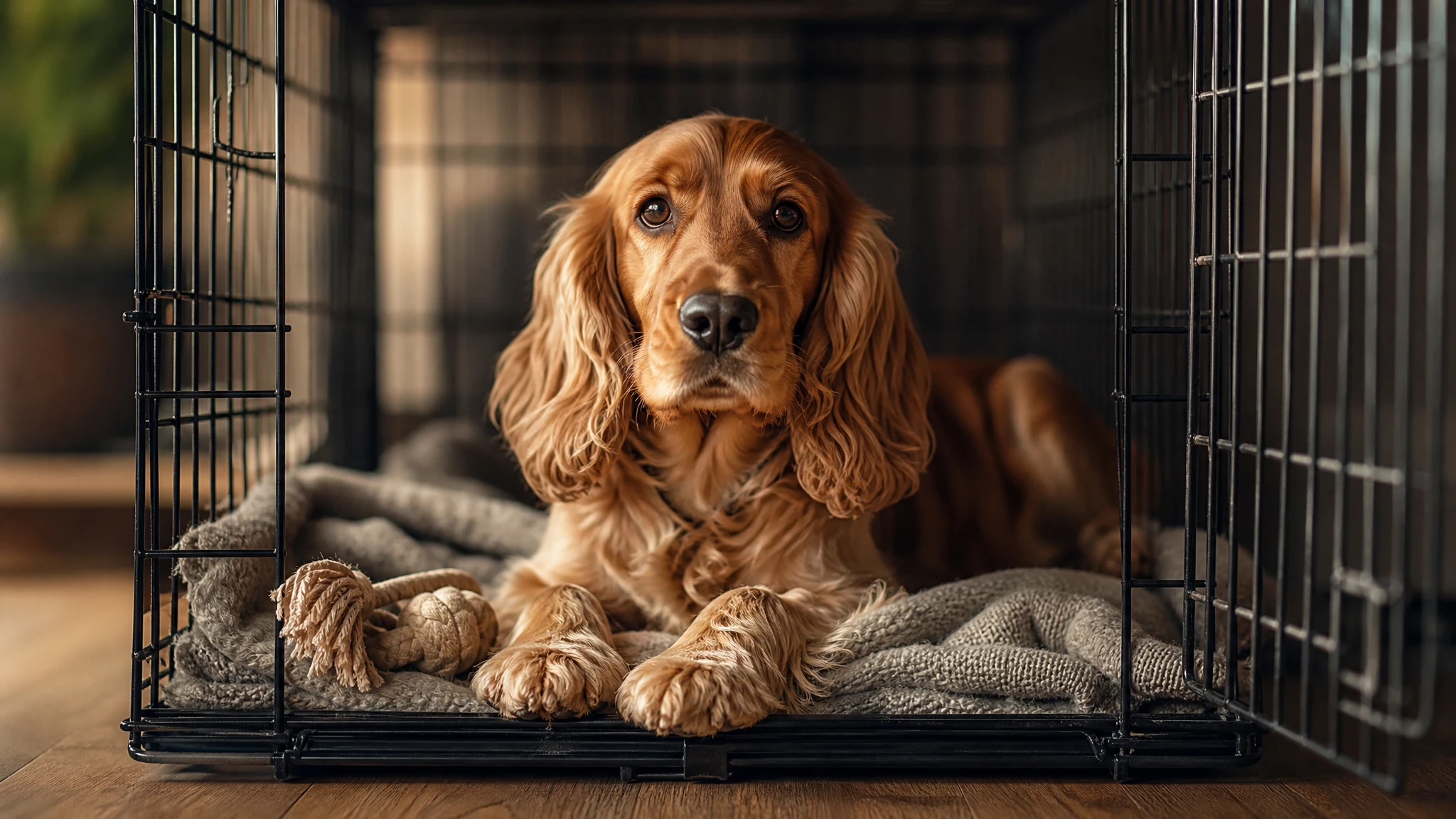
English Cocker Spaniel crate training works best when the crate feels like a quiet bedroom and not a punishment. Done patiently, it gives your dog a safe place to rest. It also gives you a way to teach calm alone time before small worries grow into big ones.
This guide walks through the whole process: choosing a crate, introducing it, building up time alone, and recognizing signs of distress. It also covers when to call your veterinarian. For the wider picture, see our complete guide to English Cocker Spaniel training.
Why Crate Training Suits This Breed
The English Cocker Spaniel Club of America, the parent club, describes the breed as merry, intelligent, athletic, affectionate and devoted to the family. The club also calls them eager to please. Those traits help with training, since many dogs of this type like working with their people. Westminster Kennel Club rates trainability at 4 out of 5.
The same devotion has a flip side. Wikipedia notes that the breed prefers company and is not suited to being left alone in a backyard. A dog that loves being with you may find your absence hard. That is why teaching calm alone time early matters.
Every dog is an individual. Some Cockers settle in a crate within days. Others need weeks of slow, patient work. Go at your dog's pace.
Materials You Will Need
- A crate of the right size. See the sizing section below.
- A divider panel if you are buying one crate for a growing puppy.
- A washable mat or bed that your dog cannot easily shred.
- Small, soft treats your dog loves, cut into tiny pieces.
- Safe chew items or a stuffable toy. Check with your veterinarian about what suits your dog.
- A light crate cover or blanket if your dog likes a den feel.
- A baby gate or exercise pen for a safe area outside the crate.
- A timer or phone to track short practice sessions.
Choosing the Right Crate Size
Size is easy to get wrong. A crate that is too big can feel less like a den. A crate that is too small is uncomfortable. The goal is a space where your dog can stand up, turn around and lie down stretched out.
Here is how to size for the breed. The English Cocker Spaniel Club of America gives adult males about 16 to 17 inches tall and 28 to 34 pounds. Females are about 15 to 16 inches and 26 to 32 pounds. Westminster Kennel Club lists a maximum of 17 inches and 34 pounds.
That is a medium-sized dog. Do not guess from the numbers alone. Here is a simple process:
- Measure your dog from nose to base of tail while standing.
- Measure from the floor to the top of the head or the top of the ears when standing, whichever is higher.
- Compare those measurements with the crate maker's own sizing chart, since sizes vary by brand.
- If you have a puppy, buy a crate sized for the adult dog and use a divider to shrink the space for now. Ask your breeder or veterinarian about the likely adult size.
Check the crate maker for exact interior dimensions. We do not list crate sizes here because brands differ.
Step-by-Step: Crate Training Your English Cocker Spaniel
Step 1: Set Up a Good Spot
Place the crate in a room where the family spends time, such as the living room or a quiet corner of the kitchen. Dogs bred to work closely with people usually do better near their family. Putting the crate in a distant basement can make it feel like isolation.
Add the mat and a toy. Keep the area free of drafts and direct sun. Leave the door tied open so it cannot swing shut and startle your dog.
Step 2: Let Your Dog Explore on Their Own Terms
Start by simply letting your dog sniff the crate. Toss a few treats near the entrance, then just inside, then toward the back. Let your dog walk in, eat and walk out freely.
Do not push, pull or lock your dog in. Praise quietly when they step inside. Repeat this over several short sessions. If your dog hesitates, go back to treats near the door and move forward more slowly.
Step 3: Feed Meals in the Crate
Once your dog walks in happily, serve meals inside the crate. At first, set the bowl near the door. Over several meals, move it farther back. When your dog is eating comfortably at the back, you can close the door while they eat. Open it as soon as the bowl is empty.
This links the crate with good things. Gradually increase the time the door stays closed after the meal, a few seconds at a time.
Step 4: Add a Cue and Short Closed-Door Sessions
Pick a simple cue like "bed" or "crate." Say it once as your dog steps in, then reward. Once the cue is reliable, close the door for a few seconds while you stay close, then reward and open the door.
Build up slowly: a few seconds, then ten, then thirty, then a minute or two. Offer a stuffed toy or chew to keep your dog busy. Mix in easy repetitions so your dog does not learn that a closed door always means a long wait.
Orvis, a retailer whose breed page offers general guidance, suggests keeping training sessions short and varied. That applies here too. Several brief sessions beat one long one.
Step 5: Move Around While Your Dog Is Crated
When your dog settles with the door closed, start moving. Stand up, take a step away, return and reward. Then walk across the room. Then leave the room for a few seconds and come back.
Keep arrivals and departures calm. Big, excited greetings can teach your dog that your coming and going is a huge event. Wait for a calm moment, then open the door.
Step 6: Build Real Alone Time
Now you can practice short absences. Give your dog the crate, a chew and a quiet cue. Walk out, wait a minute and return calmly. Increase the time in small steps, and sometimes go back to an easier step. Progress is rarely a straight line.
Do some practice when you are home, not just when you leave for errands. That way, the crate does not predict your departure. Also practice leaving without a crate, using a gated area, so your dog learns that being apart is normal in more than one setting.
Before you leave, make sure your dog has had a chance to relieve themselves and has had exercise. Orvis notes that the breed needs plenty of daily exercise, and Westminster describes the energy level as 3 out of 5. A walk or play session before a crate rest tends to make settling easier. The parent club's own exercise guidance is worth checking for specifics.
Step 7: Plan for Nights and Longer Stretches
Many owners start with the crate near their bed at night, then move it gradually if they wish. A young puppy will need to go out during the night. How long a puppy can wait varies, so ask your veterinarian or breeder for guidance on your puppy's age and needs. We do not have breed-specific development timelines to share here.
Never use the crate as a place for long stretches of confinement because you are busy. A crate is a tool for rest and safety, not a place to park a dog all day.
Preventing Separation Anxiety
Crate training and separation anxiety prevention overlap, but they are not the same. A dog can love a crate and still struggle when alone. A dog can also be anxious in a crate when the crate itself is the problem. Keep these habits in mind from the first day.
- Teach calm independence early. Reward quiet moments. Notice when your dog is resting on their own and let them be.
- Do not make departures dramatic. Skip long goodbyes. A calm, quiet exit is easier on a dog that loves company.
- Build time apart gradually. Jumping from a few minutes to a full workday sets dogs up to struggle.
- Provide enough exercise and mental work. The breed's roots are in flushing and retrieving game, according to the parent club. Sniff walks, retrieving games and simple training sessions give a dog useful work. Westminster lists agility, tracking, obedience and field work among the sports and jobs the breed does.
- Never leave your dog alone outdoors as a substitute. Wikipedia notes the breed is not suited to being left alone in a backyard.
Signs of Separation Distress
Some whining at first is normal while a dog learns a new routine. Distress looks different. Watch for these signs, which you may notice when you are about to leave, while you are away or when you return:
- Constant barking, howling or whining that does not ease
- Panting, drooling or pacing that is out of character
- Trying to escape the crate, such as scratching or biting at the bars or door
- Going to the toilet in the crate or house despite being house trained
- Refusing treats or food when you are gone
- Destroying items near doors or windows
- Following you from room to room and showing stress as you prepare to leave
A camera can help you see what happens while you are out. If you see these behaviors, pause the alone-time plan. Go back to an easier step where your dog stayed relaxed, and build again from there.
When to See a Veterinarian
Talk to your veterinarian if your dog shows signs of distress that continue or get worse, if they hurt themselves trying to get out of the crate, or if a sudden change in behavior appears. Changes in toileting, appetite or activity can have medical causes, and only a veterinarian can sort that out. Do not try to diagnose your dog yourself, and do not give supplements or medication without veterinary advice.
It is also worth asking about health in general. Wikipedia lists chronic hepatitis and progressive rod-cone degeneration (PRA) as conditions the breed is predisposed to, and Orvis notes ear infections can occur because of the long, droopy ears. Pain, vision changes or discomfort can affect how a dog copes with being alone. We could not confirm the recommended health screens for the breed here, so ask your veterinarian and check with the English Cocker Spaniel Club of America.
If distress persists, your veterinarian may refer you to a qualified behavior professional. Choose one who uses humane, reward-based methods in line with the American Veterinary Society of Animal Behavior. Avoid anyone who recommends shock, prong or choke collars, scruffing, alpha rolls or dominance methods.
Common Mistakes to Avoid
- Using the crate as punishment. The crate should stay a happy place.
- Going too fast. Rushing to long absences is the most common error.
- Letting a crying dog out mid-protest. If you can, wait for a brief pause in the noise before opening the door. If your dog seems truly panicked, stop and go back a step instead of pushing through.
- Buying the wrong size. Too big or too small both cause problems.
- Leaving a collar or unsafe items inside. Check with your veterinarian about what is safe for unsupervised time.
- Skipping exercise. A dog with plenty of energy to burn will struggle to settle.
- Making every exit emotional. Keep goodbyes and hellos low-key.
Expected Results
With steady practice, many English Cocker Spaniels learn to go into a crate calmly and rest there. Over several weeks, your dog may begin to choose the crate on their own for naps. Short absences may become easier, and your dog may show fewer signs of stress when you leave.
Results vary with age, background and temperament. Some dogs take longer, and a dog that has already developed distress may need professional help. Treat each small step as progress, and stay patient.
Quick Recap
- Choose a crate your dog can stand, turn and lie down in, and check the maker's size chart.
- Make the crate a rewarding place before closing the door.
- Build alone time in small steps and mix in easy repetitions.
- Watch for signs of distress, and slow down when you see them.
- Call your veterinarian if problems continue, appear suddenly or involve injury.
For more on cues, house manners and daily routines, return to our English Cocker Spaniel training guide.