English Cocker Spaniel Sports and Jobs: Putting the Breed's Instincts to Work
General training information. Every dog is an individual; for health or behavior concerns, see your veterinarian.
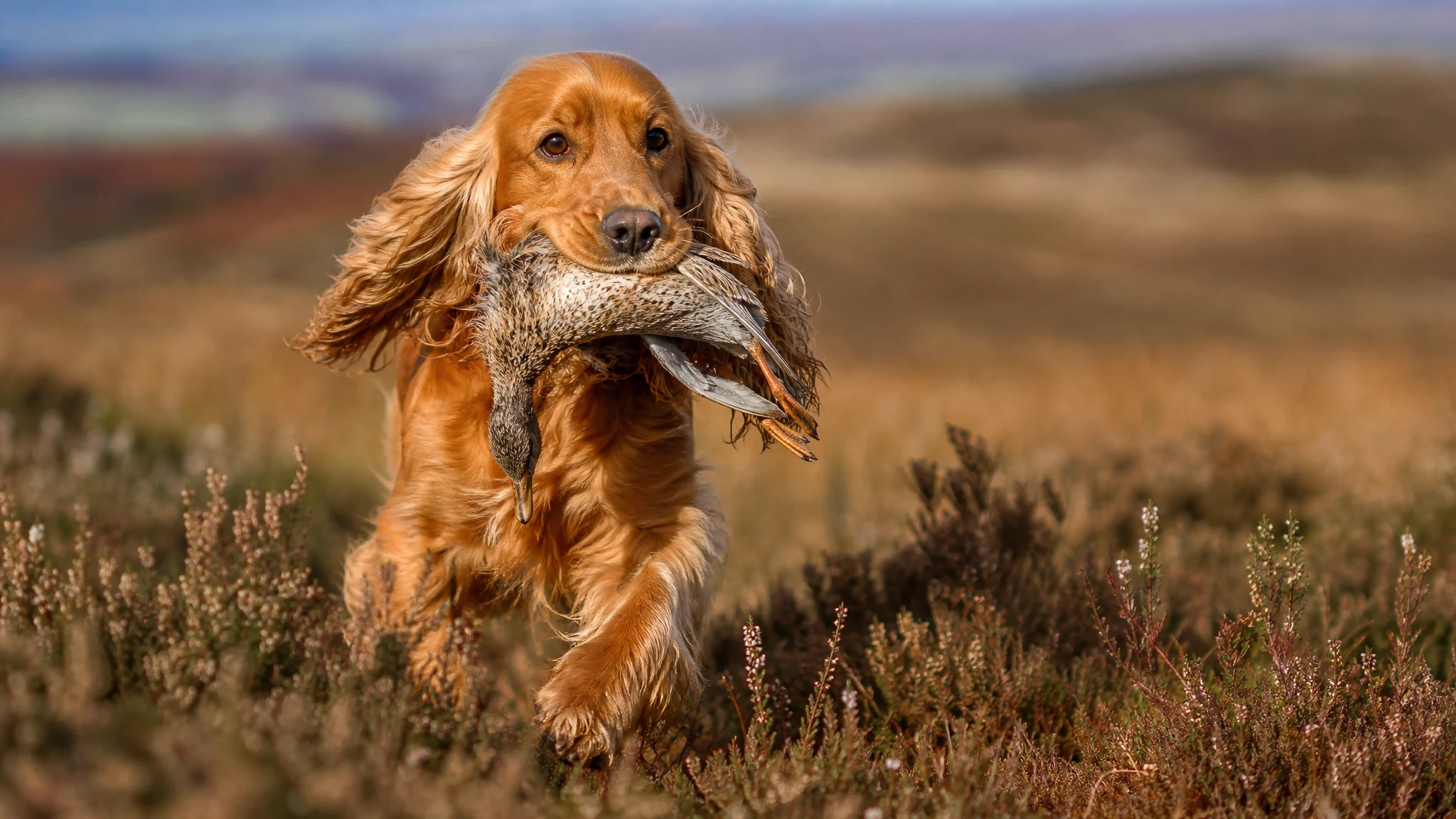
The English Cocker Spaniel was bred to work. The English Cocker Spaniel Club of America (the parent club) says the breed's original purpose was flushing woodcock, and finding, flushing and retrieving upland game. That history is why many owners find a bored Cocker is a busy Cocker, and why a job of some kind tends to help.
This guide shows you how to choose an activity, prepare your dog and get started. It covers English Cocker Spaniel sports and field work in plain steps. Every dog is an individual, so treat the breed notes as a starting point, not a promise.
What the Breed Was Built to Do
The parent club describes the breed as merry, intelligent, athletic, affectionate and devoted, eager to please and bold in the field. Westminster Kennel Club rates the breed 4 out of 5 for trainability and 3 out of 5 for energy, and lists it in the Sporting Group.
Those traits point toward activities that use the nose, the body and the brain together. They also point toward activities you do as a team. Wikipedia notes that the breed prefers company and is not suited to being left alone in a backyard. A sport gives your dog both a task and time with you.
The breed's history is worth a quick note. Wikipedia and Orvis describe it as descended from English land spaniels, with the Spaniel Club setting breed standards in 1885. The AKC then recognised English and American Cockers as separate breeds in 1946, according to Orvis.
The Sports and Jobs Open to the Breed
Westminster Kennel Club lists the show ring, obedience, agility, tracking and hunting for the breed. The parent club also lists Performance events and Junior Showmanship. Here is what each one asks of a dog.
Field work and hunting
This is the breed's original job: find, flush and retrieve upland game. It is the clearest example of an English Cocker Spaniel working dog doing what it was developed for. If you do not hunt, ask the parent club or a local spaniel club what field-style training opportunities exist in your area.
Tracking
Tracking asks your dog to follow a scent trail and use the nose on purpose. It suits a dog that likes to work with its head down and its attention on the ground. It is also a calm activity, so it can suit a dog that gets overexcited in faster sports.
Agility
Agility is a timed course of jumps, tunnels and other obstacles, guided by your voice and body. It rewards a dog that is athletic and eager to please, and it builds teamwork. Check with the AKC or a local club for the current rules, including any age and jump height requirements.
Obedience
Obedience tests precision: heeling, staying, coming when called. It is a good fit for an owner who enjoys training itself. It also strengthens the manners covered in our complete English Cocker Spaniel training guide.
Show ring and Junior Showmanship
Conformation shows judge how closely a dog matches the breed standard. Junior Showmanship is a separate event where young handlers are judged on their handling skill. Both involve learning to stand and move a dog calmly in front of a judge.
Performance events
The parent club lists Performance events as part of the breed's activities. Ask the club or the AKC which events are open to English Cocker Spaniels and how to enter.
Materials You Will Need
You do not need much to begin. Keep the list simple and humane.
- A well-fitted flat collar or a front-clip harness, plus a standard leash.
- A long line for recall practice in open areas.
- Small, soft treats your dog loves, cut tiny so sessions do not fill your dog up.
- A favorite toy for dogs that work harder for play than for food.
- Fresh water and a place to rest between sessions.
- A notebook to record what worked each day.
Skip prong, choke and shock collars. They do not belong in any of these activities. The American Veterinary Society of Animal Behavior (AVSAB) supports reward-based training, and so do we.
How to Get Started: Step by Step
Step 1: Check in with your veterinarian
Before any new athletic activity, ask your veterinarian whether your dog is ready for it. This matters most for puppies, seniors and dogs with any health concern. Wikipedia lists chronic hepatitis and progressive rod-cone degeneration (PRA) among conditions the breed is predisposed to, and Orvis notes ear infections from long, droopy ears. Your veterinarian can tell you how those apply to your dog and how to care for the ears after field or outdoor work.
Step 2: Build the basics first
Every sport sits on the same foundation: attention, a reliable recall, a sit and a stay, and walking politely on a leash. If those are shaky, work on them before you enroll anywhere. Our complete training guide walks through them in order.
Step 3: Watch what your dog already loves
Spend a week noticing. Does your dog follow scent trails across the yard? Chase and carry things? Bounce over obstacles on walks? Those habits are clues. A nose-driven dog may enjoy tracking. A carrier may enjoy retrieving work. A bouncy, quick dog may enjoy agility.
Step 4: Sample before you commit
Watch an event or class before you sign up. The AKC runs events in many of these areas, and its website lists clubs and events. Local kennel clubs, training clubs and spaniel clubs often hold classes or open houses. The parent club, the English Cocker Spaniel Club of America, is a good place to ask who is active near you. Be wary of any class that uses force or fear, and leave if you see it.
Step 5: Start with short, varied sessions
Orvis advises short, varied sessions and reward-based methods for the breed. Aim for a few minutes at a time, then stop while your dog is still keen. Change the exercise often so the work stays fresh. Plan on a few short sessions a day rather than one long one.
Step 6: Reward the behavior you want
Mark the moment your dog does the right thing with a word like "yes," then deliver the treat or toy. Pay well for effort, especially at the start. If your dog makes a mistake, simply reset and make the next try easier.
Step 7: Add difficulty slowly
Change one thing at a time: more distance, a new place, longer duration or a distraction. If your dog struggles, go back a step. Progress is rarely a straight line.
Step 8: Build in rest and balance
Orvis says the breed needs plenty of daily exercise, but a sport is not a substitute for downtime. Include walks, sniffing time, play and real rest. Watch for signs of tiredness or sore muscles, and check in with your veterinarian if something seems off.
Step 9: Enter an event when you are both ready
Read the current rules for your chosen event on the AKC site or with the host club. Requirements such as registration and age limits can change, so confirm them directly. Your first event is for learning, so keep your goals modest.
Tips for Success
- Use the nose. Scent games are a natural fit for a breed built to hunt. Hide treats in the yard or in a room and let your dog search.
- Keep it fun. A merry, eager-to-please dog usually works best when it enjoys the game.
- Train with company. Because the breed prefers company, take your dog to classes and practice with friends instead of sending it out alone.
- Take breaks. Two or three short sessions often beat one long one.
- Proof gradually. Practice in new places so your dog learns the skill, not just the room.
- Join a club. Clubs are a source of coaching, practice partners and information about local events.
Common Mistakes to Avoid
- Skipping the basics. A dog that cannot focus or come when called will struggle in any sport.
- Training too long. Long, repetitive drills can bore a bright dog. Keep sessions short and varied.
- Using harsh tools or corrections. These can damage trust and are not consistent with AVSAB guidance.
- Pushing for results. Rushing leads to stress and frustration for both of you.
- Leaving the dog outside as a substitute. A backyard alone is not a job, and the breed does not do well in it.
- Forgetting the ears. Long ears can trap debris after outdoor work. Ask your veterinarian how to check and care for them.
- Comparing your dog to others. Individual dogs vary a great deal, and so does their pace.
What Results to Expect
With steady, reward-based practice, many owners find their dogs become more focused and more settled at home. A dog with a regular job may also be less likely to invent its own, such as chewing or barking for attention, though no activity can promise a particular behavior change.
You may also notice a stronger bond as you learn to read each other. Progress depends on your dog's age, health, temperament and your consistency. Some dogs take to a sport within weeks, and others need months. If you are unsure, ask a qualified, reward-based trainer or your veterinarian for guidance.
Final Thoughts
The English Cocker Spaniel started as a working gundog, and the parent club's description of a merry, athletic, devoted companion still fits many dogs today. Dog sports for English Cocker Spaniels give that energy and intelligence a purpose, and they give you a shared hobby.
Start small, stay kind and keep it fun. Pick one activity, try it for a few weeks and see how your dog responds. If you need to firm up the basics first, head back to our complete training guide.